Back
Back
Back
Why Inventory Turnover Beats Margins in Sneaker Reselling
Why Inventory Turnover Beats Margins in Sneaker Reselling
Why Inventory Turnover Beats Margins in Sneaker Reselling
Oct 28, 2025
Oct 28, 2025
Oct 28, 2025
Inventory turnover beats margins because money only works when it’s moving.
Consistently selling and reinvesting creates more profit over time than holding out for a perfect payout. In sneaker reselling, speed compounds — margins don’t.
Inventory turnover beats margins because money only works when it’s moving.
Consistently selling and reinvesting creates more profit over time than holding out for a perfect payout. In sneaker reselling, speed compounds — margins don’t.
Inventory turnover beats margins because money only works when it’s moving.
Consistently selling and reinvesting creates more profit over time than holding out for a perfect payout. In sneaker reselling, speed compounds — margins don’t.
On This Page
On This Page
Why Selling Fast Beats Big Margins in Sneaker
Most resellers chase big percent profits.
What actually wins is how fast your money comes back.
A big margin looks nice.
Turnover—selling and getting cash back quickly—pays the bills and grows your bankroll.
Why Selling Fast Beats Big Margins in Sneaker
Most resellers chase big percent profits.
What actually wins is how fast your money comes back.
A big margin looks nice.
Turnover—selling and getting cash back quickly—pays the bills and grows your bankroll.
Why Selling Fast Beats Big Margins in Sneaker
Most resellers chase big percent profits.
What actually wins is how fast your money comes back.
A big margin looks nice.
Turnover—selling and getting cash back quickly—pays the bills and grows your bankroll.
A Tiny Bit of Math (you’ll like this)
Start with $10,000.
Sell it 4 times a year at 30% profit each time → end near $28,561.
Sell it 17 times a year at 15% profit each time → end near $107,613.
Same starting money.
Selling faster wins by a mile.
A Tiny Bit of Math (you’ll like this)
Start with $10,000.
Sell it 4 times a year at 30% profit each time → end near $28,561.
Sell it 17 times a year at 15% profit each time → end near $107,613.
Same starting money.
Selling faster wins by a mile.
A Tiny Bit of Math (you’ll like this)
Start with $10,000.
Sell it 4 times a year at 30% profit each time → end near $28,561.
Sell it 17 times a year at 15% profit each time → end near $107,613.
Same starting money.
Selling faster wins by a mile.
Meet Your “Money-Back Score” (GMROI)
Think of a simple score: Margin × Turns.
30% margin with 2 turns = 0.60 money-back score.
12% margin with 10 turns = 1.20.
Which is better? 1.20.
It means each $1 sitting in shoes brings back $1.20 over the period.
Margin alone can’t tell you that. Speed matters.
Meet Your “Money-Back Score” (GMROI)
Think of a simple score: Margin × Turns.
30% margin with 2 turns = 0.60 money-back score.
12% margin with 10 turns = 1.20.
Which is better? 1.20.
It means each $1 sitting in shoes brings back $1.20 over the period.
Margin alone can’t tell you that. Speed matters.
Meet Your “Money-Back Score” (GMROI)
Think of a simple score: Margin × Turns.
30% margin with 2 turns = 0.60 money-back score.
12% margin with 10 turns = 1.20.
Which is better? 1.20.
It means each $1 sitting in shoes brings back $1.20 over the period.
Margin alone can’t tell you that. Speed matters.
Time Is Your Real Cost
Two clocks run in the background:
Days to sell (how long a pair sits before it moves).
Days to get paid (how long cash takes to hit your account).
Shorten both clocks and your money returns faster.
When cash comes back sooner, you can buy again sooner. That’s how you compound.
Time Is Your Real Cost
Two clocks run in the background:
Days to sell (how long a pair sits before it moves).
Days to get paid (how long cash takes to hit your account).
Shorten both clocks and your money returns faster.
When cash comes back sooner, you can buy again sooner. That’s how you compound.
Time Is Your Real Cost
Two clocks run in the background:
Days to sell (how long a pair sits before it moves).
Days to get paid (how long cash takes to hit your account).
Shorten both clocks and your money returns faster.
When cash comes back sooner, you can buy again sooner. That’s how you compound.
Prices Have a “Half-Life”
Most shoes don’t sit still in price.
There’s a hot window. Then a flat spot. Then gravity.
Restocks, new colorways, and fading trends push prices down.
Each extra week you hold adds risk and steals a chance to buy fresher pairs.
Don’t “wait it out” just to feel right. Exit while the window is friendly.
Where to Sell (keep it simple)
Use the places where you can control price and move volume.
Some pairs can go on apps (StockX/GOAT) when the spread is there.
Other channels have less competition and better control.
TikTok Shop was strong for UGG last year.
There are also low-key channels not crowded yet (names withheld).
Point is: don’t judge a buy only by StockX/GOAT asks.
UGG is a “sell near retail” game. The win is how well you source and how fast you move.
If you’re on KNET, listing, price floors, and fulfillment are handled in one place.
You can push the same SKU to many outlets and keep payouts steady without babysitting.
Where to Sell (keep it simple)
Use the places where you can control price and move volume.
Some pairs can go on apps (StockX/GOAT) when the spread is there.
Other channels have less competition and better control.
TikTok Shop was strong for UGG last year.
There are also low-key channels not crowded yet (names withheld).
Point is: don’t judge a buy only by StockX/GOAT asks.
UGG is a “sell near retail” game. The win is how well you source and how fast you move.
If you’re on KNET, listing, price floors, and fulfillment are handled in one place.
You can push the same SKU to many outlets and keep payouts steady without babysitting.
The Hidden “Attention Tax”
Holding too much stock eats your day.
You recheck, relist, re-photo, re-price, count boxes, fix small problems.
That time doesn’t show up in your costs, but it steals profit per hour.
Fast turns free your time and your cash.
The Hidden “Attention Tax”
Holding too much stock eats your day.
You recheck, relist, re-photo, re-price, count boxes, fix small problems.
That time doesn’t show up in your costs, but it steals profit per hour.
Fast turns free your time and your cash.
The Hidden “Attention Tax”
Holding too much stock eats your day.
You recheck, relist, re-photo, re-price, count boxes, fix small problems.
That time doesn’t show up in your costs, but it steals profit per hour.
Fast turns free your time and your cash.
Beat Emotions With Rules
Feelings make us hold too long. Rules fix that.
Write these before you buy:
Floor payout: the lowest net you’ll take.
Max hold days: 60/90/120—pick by category.
Trigger: if price hits your floor or it ages past your limit → sell it.
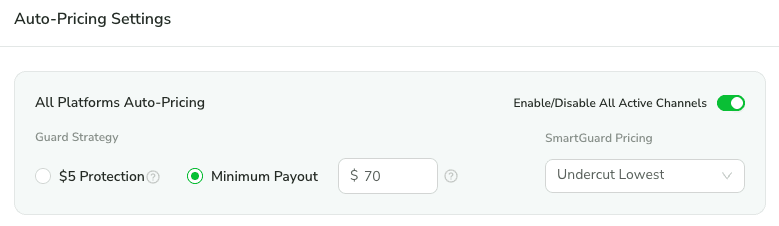
Using KNET, you can set minimum payouts and let auto-pricing adjust.
When the rule hits, listings update and move. No guessing. No arguing with yourself.
Beat Emotions With Rules
Feelings make us hold too long. Rules fix that.
Write these before you buy:
Floor payout: the lowest net you’ll take.
Max hold days: 60/90/120—pick by category.
Trigger: if price hits your floor or it ages past your limit → sell it.
Using KNET, you can set minimum payouts and let auto-pricing adjust.
When the rule hits, listings update and move. No guessing. No arguing with yourself.
Beat Emotions With Rules
Feelings make us hold too long. Rules fix that.
Write these before you buy:
Floor payout: the lowest net you’ll take.
Max hold days: 60/90/120—pick by category.
Trigger: if price hits your floor or it ages past your limit → sell it.
Using KNET, you can set minimum payouts and let auto-pricing adjust.
When the rule hits, listings update and move. No guessing. No arguing with yourself.
A 12-Week Showdown
Two resellers. Each starts with $10,000.
Max-Margin Mike
Chases 40% profit.
Average cycle: 6 weeks.
In 12 weeks, he sells 2 times → ends near $19,600.
Turnover Tasha
Aims for 12% profit.
Average cycle: 1.5 weeks.
In 12 weeks, she sells 8 times → ends near $24,850.
Same starting cash.
Tasha wins because her money works more times.
A 12-Week Showdown
Two resellers. Each starts with $10,000.
Max-Margin Mike
Chases 40% profit.
Average cycle: 6 weeks.
In 12 weeks, he sells 2 times → ends near $19,600.
Turnover Tasha
Aims for 12% profit.
Average cycle: 1.5 weeks.
In 12 weeks, she sells 8 times → ends near $24,850.
Same starting cash.
Tasha wins because her money works more times.
A 12-Week Showdown
Two resellers. Each starts with $10,000.
Max-Margin Mike
Chases 40% profit.
Average cycle: 6 weeks.
In 12 weeks, he sells 2 times → ends near $19,600.
Turnover Tasha
Aims for 12% profit.
Average cycle: 1.5 weeks.
In 12 weeks, she sells 8 times → ends near $24,850.
Same starting cash.
Tasha wins because her money works more times.

Simple Ways to Sell Faster
Buy what you can ship. If you can ship 60 pairs a day, don’t buy 800 slow ones.
Fewer styles, deeper stacks. It speeds up listing and pricing.
Plan your sell windows. Drops, holidays, paydays—pick dates on purpose.
Price the day it lands. Touch it once, list it once.
Age ladders: at 30 / 60 / 90 days, your price rules change automatically (nudge → discount → clear).
If you use KNET, cross-listing and repricing are built in.
You sell faster and keep floors protected, without spinning plates.
Simple Ways to Sell Faster
Buy what you can ship. If you can ship 60 pairs a day, don’t buy 800 slow ones.
Fewer styles, deeper stacks. It speeds up listing and pricing.
Plan your sell windows. Drops, holidays, paydays—pick dates on purpose.
Price the day it lands. Touch it once, list it once.
Age ladders: at 30 / 60 / 90 days, your price rules change automatically (nudge → discount → clear).
If you use KNET, cross-listing and repricing are built in.
You sell faster and keep floors protected, without spinning plates.
Simple Ways to Sell Faster
Buy what you can ship. If you can ship 60 pairs a day, don’t buy 800 slow ones.
Fewer styles, deeper stacks. It speeds up listing and pricing.
Plan your sell windows. Drops, holidays, paydays—pick dates on purpose.
Price the day it lands. Touch it once, list it once.
Age ladders: at 30 / 60 / 90 days, your price rules change automatically (nudge → discount → clear).
If you use KNET, cross-listing and repricing are built in.
You sell faster and keep floors protected, without spinning plates.
Bottom Line
Margin looks good on a screenshot.
Turnover grows the business.
Score yourself by Margin × Turns.
Shorten the time to sell, speed up the time to get paid, and enforce your sell rules.
Do that, and even “small” profits stack into a very big year.
Bottom Line
Margin looks good on a screenshot.
Turnover grows the business.
Score yourself by Margin × Turns.
Shorten the time to sell, speed up the time to get paid, and enforce your sell rules.
Do that, and even “small” profits stack into a very big year.
Bottom Line
Margin looks good on a screenshot.
Turnover grows the business.
Score yourself by Margin × Turns.
Shorten the time to sell, speed up the time to get paid, and enforce your sell rules.
Do that, and even “small” profits stack into a very big year.
Business
Business
September Seller Summit Recap
September Seller Summit Recap
September Seller Summit Recap
Oct 28, 2025
Oct 28, 2025

Business
Business
How to Scale Your Reselling Business (Delegation)
How to Scale Your Reselling Business (Delegation)
How to Scale Your Reselling Business (Delegation)
Oct 28, 2025
Oct 28, 2025
Business
Business
5 Sneaker Reselling Myths That Keep Sellers Broke in 2025
5 Sneaker Reselling Myths That Keep Sellers Broke in 2025
5 Sneaker Reselling Myths That Keep Sellers Broke in 2025
Oct 28, 2025
Oct 28, 2025
Sell More, Work Less
Sell More, Work Less
Apply to Sell on KNET
Apply to Sell on KNET
Sell More, Work Less
Apply to Sell on KNET